The four pillars of our educational philosophy provide children with a strong foundation that encourages them to be their best, happiest selves.
-
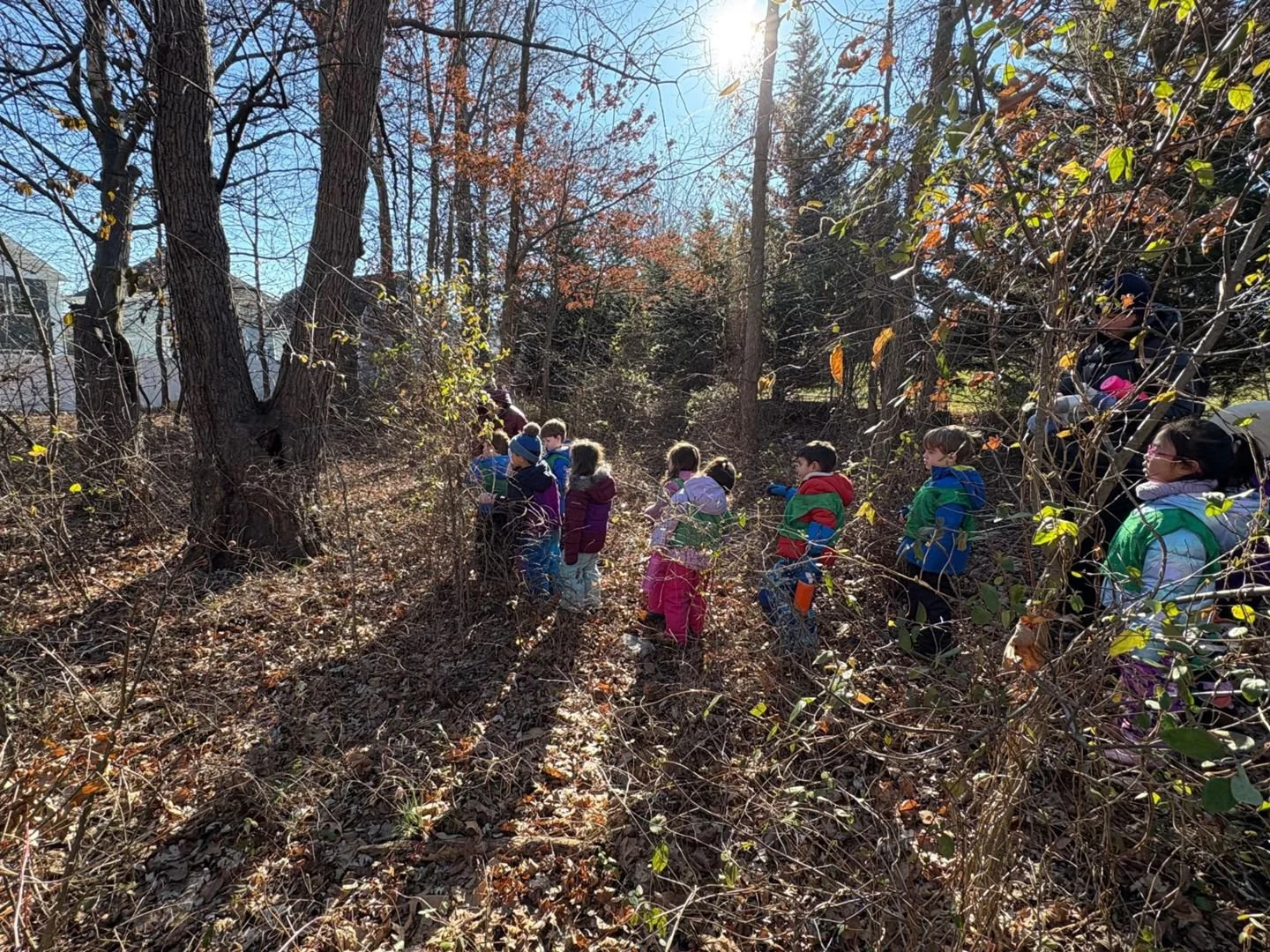
Sprout House children play outside every day, except when temperatures are under 20 degrees. There is a charming Norwegian saying: “Det finnes ikke dårlig vær, bare dårlig klær!” That translates to: “There is no bad weather, only bad clothing!”We play in our own play yard, the public park behind the school, and during walking field trips around town. Even indoor play activities often are stimulated by seasonal phenomena that children experience first-hand outside.
Benefits to Attention and Focus:
Increased situational awareness at sky, eye, and ground levels.
Increased discernment of seriation, i.e., bud, flower, fruit, and seed.
Increased confidence in the validity of one's own observations.
Benefits to Physical Development:
Heightened sensory awareness and processing, i.e., wind, drizzle, scents, bird calls, traffic noise, temperature change, and uneven ground.
Increased stamina, muscle strength, and balance through greater physical activity and freedom of movement.
-
Outdoor play is especially conducive to science and engineering learning. Throughout the four seasons there are small changes to notice daily. With each discovery, teachers guide the children to investigate nature’s interrelated systems and cycles– i.e. the seed-plant-flower-seed cycle of a green bean, the life cycle of the Eastern Hercules Beetle, or the exciting evidence of animal tracks in the snow.In the outdoors, children inevitably find and resolve an infinite number of engineering challenges. They locate nature’s “loose parts” and learn their properties and uses, i.e. lifting logs, rolling acorns, or digging with pointy sticks. Children also estimate physical dimensions with their whole body– jumping from a height, leaping over a rivulet, or sliding on ice. They build collaboratively by communicating their goals, materials, and design while incorporating forces such as gravity, friction, or wind. The result is reality-based critical thinking and resilience.
Our play-based, place-based, developmentally-appropriate teaching methods draw from best practices in multiple early childhood pedagogies—including Forest School, Reggio-Emilia, and Montessori.
“Over Thanksgiving Kiran led a family hike up switchbacks and deer trails identifying raptors, squirrel dreys, decomposers and turkey tail mushrooms. It was never a race to get to the top, but a fascinating journey through the woods with him yelling “Hey guys come check this out!!” -
— Jocelyn S., Parent
-
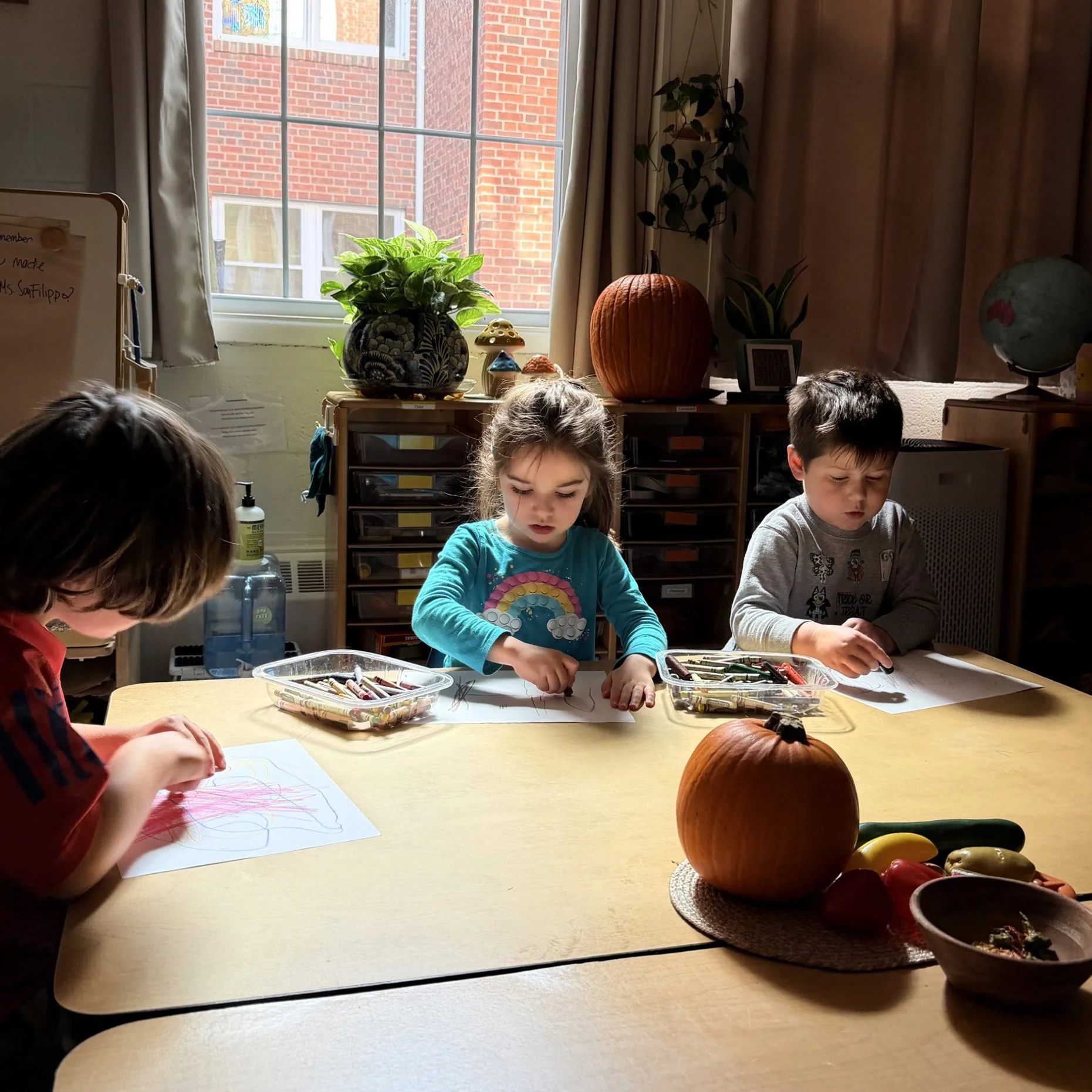
At Sprout House, small class size fosters a homelike setting. Our teachers know their children well and support their students to grow and learn at their own pace. During playtime with teacher-designated materials, our educators listen to children’s ideas and introduce a complexity to lift the child’s understanding to a higher level. (See Bloom’s Taxonomy of Questions.) A child is never left to their own screen devices, and teachers use screens rarely for teaching.Much of the day centers around developing a child’s inner controls. At lunchtime, the school’s primary focus is community - eating together and conversing in a natural way. At our outdoor playtime, children’s interaction with living things engenders a gentle and respectful atmosphere towards the earth. During our many gear changes, we teach transitions. Teachers instill calmness and logic in choosing appropriate clothing and in self-dressing. We also inspire patience in waiting for others.
“Most teachers think they should only teach prescribed curriculum. Sprout House teachers teach about the children’s daily discoveries, the joy of their connections.”
— SUZANNE F., Grandparent
-
Sprout House provides fresh fruits and vegetables and natural crackers for morning/afternoon snacks daily. We serve no refined sugar, dyes, or artificial ingredients. We ask parents to pack a healthy lunch from home, consisting of nutrient-dense whole foods, avoiding ultra-processed items. We encourage colorful fresh fruits and vegetables, and healthy fats and proteins. As children get accustomed to eating diverse whole foods with peers at school, they tend to surprise their parents by asking for new foods at home.Our approach prioritizes responsibility, sustainability, and the environment. Sustainable materials are used for play and art. For example, we use paint brushes and paint rather than plastic disposable markers; liquid glue and paddles rather than glue sticks. We have many wooden toys, including proportionally accurate block sets in each classroom, sturdy ride-on trucks, and calming wooden play kitchens.